

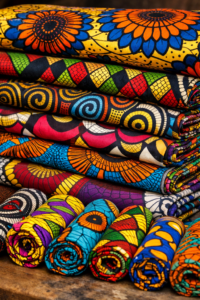
Ankara fabrics are popular worldwide today for their bold patterns, vibrant colours, and cultural symbolism. Through this, it has grown from an African region alone into a global fashion staple.
Whether worn casually, styled for corporate settings, or designed into statement pieces, Ankara fabrics continue to define contemporary African-inspired fashion.
In this blog post, we explore everything about Ankara fabrics, including the history of African print fabric (specifically as it relates to Ankara), how Ankara fabric is made, and why it remains one of the most powerful textile expressions of identity today.
History of African Print Fabric (The Ankara Story)
Ankara fabrics have evolved a lot; therefore, when discussing the history of African print fabric, it is important to focus on how Ankara specifically evolved.
Ankara fabric traces its origins to the 19th century. European manufacturers attempted to industrialise Indonesian batik using a wax-resist technique. While the fabric failed in Indonesia, it gained massive popularity in West Africa.
African traders embraced the prints and began assigning names and meanings to the patterns. Over time, the fabric became deeply rooted in West African culture, especially in countries like:
- Nigeria
- Ghana
- Ivory Coast
By the mid-20th century, Ankara was no longer just imported cloth; it had become a symbol of pride, independence, and cultural identity.
Today, Ankara is often referred to as:
- African wax print
- Dutch wax
- Ankara cotton
- Wax print fabric
Despite its global manufacturing history, Ankara’s cultural ownership and stylistic evolution belong strongly to Africa.
What Makes Ankara Fabrics Unique?
Ankara stands out because of three defining features:
1. Bold, High-Contrast Patterns
Ankara prints are intentionally vibrant. The colours are strong and often layered, creating visual impact from a distance.
2. Symbolic Designs
Many Ankara patterns are named and carry meaning. They may represent:
- Prosperity
- Marriage
- Social status
- Celebration
- Strength
Fabric selection can sometimes communicate messages without words.
3. Double-Sided Visibility
Authentic Ankara often shows visible colour intensity on both sides of the fabric, which is a sign of quality wax printing.
How Ankara Fabric Is Made
Understanding how African print fabric is made becomes clearer when focusing specifically on Ankara’s wax-resist process.
Step 1: Cotton Base Preparation
Ankara begins with 100% cotton fabric. Cotton is chosen because it:
- Absorbs dye effectively
- Holds wax patterns clearly
- Remains breathable
- Is durable
Step 2: Wax Application
Hot wax is applied to the fabric in specific patterns. Traditionally, this was done manually. Today, engraved rollers apply wax mechanically for precision and scale.
The wax prevents dye from penetrating certain areas.
Step 3: Dyeing
The fabric is dipped into dye baths. Only areas without wax absorb the colour.
For multi-coloured Ankara, this process may be repeated several times.
Step 4: Wax Removal
After dyeing, the wax is removed using hot water. This reveals the final pattern and often leaves a slightly “crackled” effect — a signature characteristic of authentic wax prints.
Step 5: Finishing
The fabric is dried, treated, and quality-checked before distribution.
This wax-resist technique is what differentiates Ankara from ordinary printed cotton fabric.
Types of Ankara Fabrics Explained
Although Ankara is one category itself, there are variations within it. Understanding the types of Ankara fabrics explained helps buyers and designers make better choices.
1. Real Wax Ankara
- Uses true wax-resist technique
- Slight crackle effect
- Vibrant colour penetration
- Higher quality and price
2. Super Wax Ankara
- Premium cotton base
- Stronger dye fixation
- More refined finish
- Often more durable
3. Printed Ankara (Imitation Wax)
- Printed using digital or screen methods
- No crackle effect
- Usually lighter weight
- More affordable
Each type serves different fashion purposes, but real wax Ankara is often preferred for premium garments.
The Cultural Importance of Ankara Fabrics
Ankara is more than clothing material — it is identity.
In many communities:
- Families coordinate Ankara for weddings
- Churches use Ankara for group celebrations
- Social clubs design custom prints
- Political campaigns produce branded Ankara
Ankara is frequently used to mark:
- Birthdays
- Traditional ceremonies
- Religious celebrations
- Independence anniversaries
Wearing Ankara can signify belonging and unity.
Ankara Fabrics in Modern Fashion
Ankara has evolved dramatically in the last two decades.
Designers now create:
- Structured blazers
- Corporate dresses
- Two-piece co-ords
- Casual streetwear
- Maxi gowns
- Jumpsuits
Ankara is no longer restricted to traditional tailoring. It blends with:
- Denim
- Satin
- Mesh
- Minimalist silhouettes
This modern adaptation has positioned Ankara in international fashion conversations.
See also:
Ankara Fabrics in the UK
Ankara has seen strong growth in cities like:
- London
- Manchester
- Birmingham
Diaspora communities and fashion-forward creatives have helped popularise Ankara in:
- Graduation photoshoots
- Weddings
- Fashion events
- Everyday styling
In the UK market, Ankara represents both cultural heritage and bold individuality.
How to Identify Quality Ankara Fabric
If you are evaluating Ankara fabrics, consider:
1. Colour Depth
Strong and even colour distribution is essential.
2. Fabric Texture
Good Ankara feels structured but soft.
3. Print Clarity
Patterns should appear sharp, not blurred.
4. Minimal Colour Bleeding
Quality wax prints should not bleed excessively when washed correctly.
How to Care for Ankara Fabrics
Proper care extends longevity.
- Wash in cold water
- Avoid strong bleach
- Do not soak for long periods
- Air dry
- Iron inside-out
With proper maintenance, Ankara fabrics retain their vibrancy for years. Here is also a post on how to maintain Ankara fabrics.
Why Ankara Fabrics Continue to Thrive
Several reasons explain Ankara’s lasting appeal:
1. Timeless Visual Impact
Its boldness makes it impossible to ignore.
2. Adaptability
It works across generations and occasions.
3. Cultural Storytelling
Patterns often communicate values and messages.
4. Global Recognition
From Africa to Europe and North America, Ankara continues expanding its reach.
The Future of Ankara Fabrics
As fashion moves toward sustainability and identity-driven design, Ankara remains relevant because:
- It is cotton-based
- It is durable
- It encourages cultural expression
- It adapts to modern silhouettes
Ankara fabrics are not fading trends — they are evolving heritage.
Final Thoughts
Ankara fabrics represent colour, culture, confidence, and craftsmanship. Understanding the history of African print fabric through Ankara, learning how Ankara fabric is made, and recognising the types of Ankara fabrics explained gives a deeper appreciation for what appears at first glance as just patterned cotton.
Ankara is a tradition woven into modern fashion.
And its story is still unfolding.