Behind the colourful textiles in African fabrics lies history, identity, resistance, storytelling, and global commerce woven together. The history of African print fabrics is not simple; it is more layered than people expected.
African prints do not just come into being overnight; they have evolved through centuries of trade, colonisation, innovation and cultural adaptation. Now, these fabrics are used and are dominating weddings, fashion weeks, political movements, and diaspora communities worldwide.
In this detailed guide, we will explore:
- The true origin of African print fabrics
- How African wax prints developed
- The influence of global trade on African textiles
- The evolution of African fashion through fabric
- The cultural meaning behind African prints
- How modern designers are redefining African textiles
In this article, we educate, explore history, written to help you deeply understand the evolution of African print fabrics.
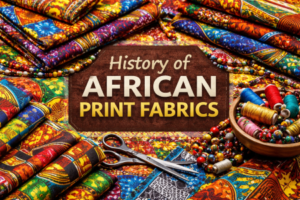
What Are African Print Fabrics?
African print fabrics refer to a wide range of textiles associated with African identity and fashion. These include:
- Ankara (African wax print)
- Kente
- Adire
- Kitenge
- Dashiki prints
- Mudcloth
Each fabric has its own origin story, technique, and cultural significance.
However, when many people say, “African print fabric,” they often mean wax print fabric, commonly known as Ankara. To understand the evolution of African prints, we must go back several centuries.
The Early History of African Textiles
Before wax prints existed, Africa already had rich textile traditions.
Long before European trade influence, African communities were producing sophisticated fabrics using:
- Hand weaving
- Indigo dyeing
- Hand painting
- Strip weaving
- Raffia weaving
For example:
- West Africa was known for strip-woven cloth.
- Nigeria developed indigo-dyed Adire.
- Ghana produced the symbolic Kente cloth.
- Mali became famous for mudcloth (Bogolanfini).
These fabrics were not just decorative. They represented:
- Social class
- Spiritual beliefs
- Marital status
- Royal authority
- Community identity
Textiles were a form of communication.
The Origin of African Wax Print Fabric
Here is where the evolution becomes interesting.
Though African wax prints are largely associated with Africa, they were inspired by the Indonesian batik.
In the 19th century, the Dutch East India Company attempted to industrially reproduce Indonesian batik using wax-resist dyeing techniques. These machine-made fabrics were intended for the Indonesian market but were not well received there.
However, something unexpected happened. The fabrics gained popularity in West Africa instead of Indonesia.
These wax prints began selling in West African coast because African consumers embraced them and gave them great new meaning. As time goes on, the prints were redesigned to reflect African culture, proverbs, and political message and that marked the beginning of what we now call African wax print fabric.
How African Print Fabrics Evolved Through Trade
The history of African print fabrics is deeply tied to global trade.
1. Colonial Trade Routes
European traders distributed wax fabrics throughout:
- Ghana
- Nigeria
- Togo
- Benin
African women traders became powerful distributors of wax prints. They influenced which designs were produced and even commissioned specific patterns. This became the major turning point in the evolution of African fashion.
2. African Agency in Design
The production of African print may start in Europe, but Africans controlled the meaning with each pattern given different names, such as:
- Speed Bird
- My Husband Is Capable
- Michelle Obama’s Handbag
These names carried social commentary and political symbolism, and the fabric became a storytelling tool.
Cultural Significance of African Print Fabrics
One of the most important aspects of African print history is the symbols they represent. African prints often represent:
- Fertility
- Wealth
- Power
- Unity
- Resistance
- Celebration
In many African societies, fabric choice communicates messages without words.
For instance:
- Wedding fabrics differ from funeral fabrics.
- Royal prints differ from everyday prints.
- Political campaigns use symbolic designs.
African print fabrics became tools of identity during colonial resistance movements. Wearing African textiles became an act of pride and independence.
Evolution of African Print Fabrics in the 20th Century
The 20th century transformed African textiles dramatically.
Industrial Production Expansion
European companies like Vlisco began mass-producing wax prints specifically for African markets.
African consumers influenced patterns so heavily that designs began reflecting:
- Local folklore
- Modern technology
- Political leaders
- Religious symbols
The evolution moved from imitation batik to a fully African-owned product and identity.
Post-Independence Era
After many African nations gained independence in the mid-20th century, African prints became symbols of nationalism in countries such as:
- Nigeria
- Ghana
- Senegal
They saw a rise in African fashion as a statement of cultural pride. Through this, Western suits were gradually replaced at ceremonies by traditional attire made with African print fabrics. They had evolved from imported goods to national identity symbols.
Types of African Print Fabrics Explained
To understand the evolution properly, we must differentiate between types.
1. Ankara (African Wax Print)
Machine-produced wax-resist cotton fabric. Known for bold, colourful patterns, widely worn across West and Central Africa.
2. Kente Cloth
Handwoven silk or cotton fabric. It originated in Ghana and is traditionally worn by royalty.
3. Adire
This is an indigo-dyed fabric from Nigeria. It uses resist-dye techniques and is often handmade.
4. Mudcloth (Bogolanfini)
This is a Traditional fabric from Mali. They are dyed with fermented mud and are very rich in symbolism. Each fabric tells a different historical story.
How African Print Fabric Is Made
Understanding the production process helps explain its evolution.
Wax Print Production Steps:
- Cotton fabric preparation
- Wax application in patterns
- Dye immersion
- Wax removal
- Final finishing
Modern factories use industrial rollers instead of hand wax techniques. However, the core principle remains wax resists dye to create patterns.
In contrast, traditional fabrics like Adire involve hand tying, stitching, or painting before dyeing. The shift from handmade to industrial production reflects the evolution of African print fabrics into global commodities.
African Print Fabrics in Modern Fashion
The 21st century introduced a new phase. African prints are now global. Designers from London, Paris, and New York City have incorporated African prints into high fashion collections.
African designers such as Svabrics, Duro Olowu, Lisa Folawiyo have redefined how African prints are seen globally. The evolution has moved from:
Traditional cloth → Colonial trade product → National identity → Global fashion statement. Today, African prints appear in:
- Corporate wear
- Streetwear
- Bridal fashion
- Accessories
- Footwear
- Home décor
African Print Fabrics and the Diaspora
The African diaspora played a major role in the global spread of African prints. In countries like:
- United Kingdom
- United States
African communities use print fabrics to maintain cultural identity.
During events like:
- Black History Month
- Cultural festivals
- African weddings
African print clothing becomes a visual declaration of heritage. Social media has further accelerated the popularity of African print fashion.
Sustainability and the Future of African Print Fabrics
Another phase in the evolution involves sustainability. Today, conversations around African textiles include:
- Ethical production
- Local manufacturing
- Reducing counterfeit fabrics
- Supporting African-owned textile businesses
There is increasing demand for:
- Locally produced wax prints
- Eco-friendly dye processes
- Preservation of traditional textile methods
African print fabrics are evolving again — this time toward sustainability and authenticity.
Common Misconceptions About African Print Fabrics
Myth 1: African prints originated in Africa.
Reality: Wax prints were inspired by Indonesian batik but were culturally transformed in Africa.
Myth 2: All African fabrics are the same.
Reality: There are dozens of textile traditions across Africa.
Myth 3: African prints are only for traditional events.
Reality: Modern African prints are worn casually, professionally, and globally.
Why the History of African Print Fabrics Matters
Understanding the evolution of African print fabrics helps us see:
- How cultures adapt to global influences
- How trade shapes identity
- How fashion becomes resistance
- How textiles carry political meaning
African prints are not just fashion trends. They represent resilience, creativity, and cultural ownership.
Final Thoughts: The Ongoing Evolution of African Prints
The history of African print fabrics is not finished. It is still evolving. From handwoven royal cloths to industrial wax prints… From colonial trade routes to global fashion runways… From local markets to international e-commerce platforms… African print fabrics continue to adapt while preserving identity. As designers innovate and younger generations reinterpret styles, African textiles will remain powerful symbols of culture and pride. Understanding their history allows us to wear them not just beautifully, but meaningfully.